



Quick summary:Like you, thousands of people mail parcels across Australia via courier or post every day. When companies try their best to deliver, some packages might not reach the final destination. Some are unable to collect the parcels; some wish to return them. When any such situation occurs, these packages are considered unclaimed mail.
So, unclaimed mail refers to packages, letters, or parcels that were unable to be delivered or collected by the recipient due to incorrect addresses, multiple delivery attempts failure, or other conditions.
Many Australians have shown a keen interest in unclaimed packages, being curious about the unclaimed mail mystery box Australia, its legality, how one gets them, and more. Here we are as your courier experts, to explain this concept in detail so that you gather all you need before getting these unclaimed mails.
Key Takeaways
- All the packages or parcels that could not be delivered or were not collected are unclaimed mail.
- Some of this unclaimed mail is sold legally through various kinds of auctions.
- If these are purchased via legitimate sellers, then it is legal to buy unclaimed mail mystery boxes.
- Wondering what could be in this unclaimed mail? Well, clothing, home decor, household items, electronics, anything.
- It is not like every box has valuable items, so keep your expectations accordingly, and yes, always buy from trusted, transparent sources.
What Is an Unclaimed Mail Mystery Box?
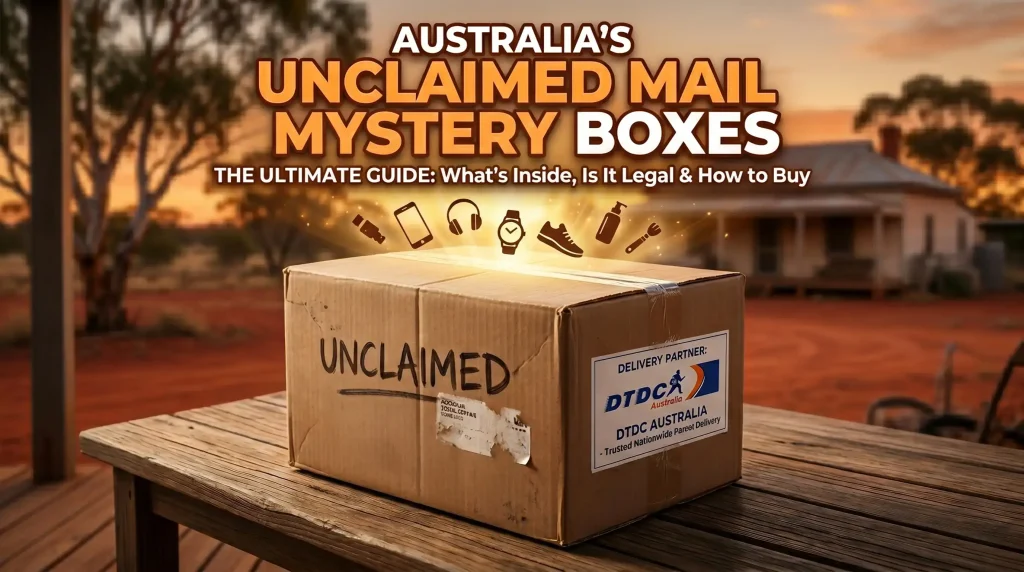
An unclaimed mail mystery box is a sealed package containing real items from parcels that were never successfully delivered to their original recipients. These aren’t random cheap products — they’re genuine shipped goods with a real postal history.
Think about what happens when a parcel can’t be delivered: the address is wrong, the recipient has moved, nobody answers after multiple attempts, or the sender never followed up. Under Australian postal and logistics regulations, parcels that remain unclaimed for a set period — typically 30 to 90 days depending on the carrier — are legally classified as abandoned goods.
From there, the logistics company, auction house, or licensed reseller has the right to process, repackage, and resell the contents. Those items often end up in mystery boxes sold to the public.
Is It Legal to Buy Unclaimed Mail in Australia?
Yes — with the right conditions. Buying unclaimed mail in Australia is legal when the seller has acquired the goods through proper legal channels. Here’s how the process typically works:
A courier company or postal service attempts delivery multiple times. If the parcel remains unclaimed beyond the legally required holding period and the sender cannot be contacted, the parcel is declared abandoned. The carrier then has the right to dispose of or sell the contents, usually through licensed auction platforms or approved resellers.
What you need to watch out for is sellers who cannot explain their sourcing. A legitimate operator will be transparent about where their inventory comes from. Vague answers like “we source from various places” are a red flag.
Where Do These Mystery Boxes Actually Come From?
The supply chain for unclaimed mail mystery boxes in Australia runs through several channels, and understanding them helps you choose the right seller.
Courier and Logistics Companies
When courier companies like DTDC, Australia Post, and others accumulate undeliverable parcels beyond a holding window, those goods enter a disposal or resale process. Some carriers sell in bulk to specialist businesses who then repackage items as mystery boxes.
Australia Post Auctions
Australia Post has historically held auctions of unclaimed and returned mail through platforms such as Grays Online, one of Australia’s largest auction sites. Items ranging from electronics and clothing to books and household goods have appeared in these sales. Grays Online also runs regular auctions of returned Amazon stock and other e-commerce returns.
E-commerce Returns
A significant portion of mystery box inventory comes from online retail returns — items sent back to sellers or warehouses that are never restocked. Amazon return pallets and similar bulk lots are another well-known source in this space.
Specialist Resellers
A growing number of Australian businesses specifically source unclaimed and returned goods, inspect them for safety and legality, repackage them, and sell them as mystery boxes through their own websites or platforms like eBay.
What Can You Find Inside an Unclaimed Mail Mystery Box?
This is the question everyone asks — and the honest answer is: it genuinely varies. Because the contents reflect whatever was originally being shipped, a single batch of unclaimed parcels might contain a mix of:
| Common Items | Occasionally Higher-Value Items |
|---|---|
| Phone cases and accessories | Wireless headphones |
| Clothing and fashion items | Smart home devices |
| Skincare and beauty products | Watches and jewellery |
| Books and stationery | Gaming peripherals |
| Kitchen and home accessories | Branded clothing and footwear |
| Tools and hardware | Tablets or small electronics |
| Toys and collectibles | Cameras or photography gear |
The value in a mystery box is never guaranteed — that’s the nature of the product. What you’re paying for is the probability of finding something worthwhile, combined with the experience of not knowing what you’ll get. Treat it as entertainment with potential upside, not a guaranteed investment.
How to Buy an Unclaimed Mail Mystery Box in Australia
There are several routes to buying unclaimed mail boxes in Australia, ranging from major online marketplaces to specialist resellers. Here’s where to look and what to consider.
1. Auction Platforms
Auction sites are the most transparent way to buy unclaimed goods in Australia. Grays Online and Allbids regularly feature returned and unclaimed parcel lots. You can see photos, read lot descriptions, and bid competitively — which means the price reflects actual market value rather than a mystery markup.
2. Amazon Australia
On Amazon.com.au, you can search “mystery box” and filter by category. Choose sellers marked as “Fulfilled by Amazon” and look for those with strong review histories. Some sellers specifically offer returned or surplus stock as mystery boxes. Check delivery estimates carefully — not all sellers ship from within Australia.
3. eBay Australia
eBay has a large and varied selection of mystery boxes, including sellers who specifically deal in unclaimed mail lots. Prices typically run from AUD $15 for small mixed boxes to several hundred dollars for curated electronics lots. Always check the seller’s feedback rating, return policy, and whether they describe their sourcing method. Sellers with fewer than 50 reviews or a score below 98% should be approached with extra caution.
4. Specialist Mystery Box Websites
A growing number of Australian businesses operate dedicated mystery box shops online. Look for sellers who clearly state their sourcing (courier returns, postal unclaimed goods, e-commerce returns) and have an active social media presence with real unboxing content. Transparency about the process is the most reliable trust signal.
5. Independent Social Sellers
Many sellers operate through Instagram, TikTok, and Facebook. Some are legitimate small businesses; others are not. If purchasing from a social seller, insist on: a verifiable business name, a returns policy in writing, and proof of prior sales (reviews, unboxing videos with real customers). Never pay via direct bank transfer to an unknown seller.
How Much Does an Unclaimed Mail Mystery Box Cost in Australia?
Pricing varies widely depending on the size of the box, the type of contents, and the seller. Here’s a rough breakdown of what you’ll typically find:
| Box Type | Typical Price Range (AUD) | What to Expect |
|---|---|---|
| Small mixed parcel box | $20 – $50 | 2–5 miscellaneous items, everyday goods |
| Standard mystery box | $50 – $150 | 5–10 items, mix of clothing, accessories, small electronics |
| Electronics-focused box | $100 – $300 | Gadgets, accessories, refurbished tech items |
| Premium or large box | $300 – $800+ | Higher-value items, curated lots, brand-name goods |
| Amazon return pallet | $85 – $500+ | Bulk lots, suitable for resellers or thrill seekers |
A good rule of thumb: if the price seems too cheap relative to what the seller claims is inside, it probably is. A $25 box claiming to potentially contain a PlayStation 5 is not a mystery box — it’s a misleading promotion.
Buying Unclaimed Mail by State: What You Need to Know
The market for unclaimed mail mystery boxes has grown across every Australian state and territory. Here’s a quick overview of what’s available by location:
New South Wales (Sydney)
The largest market. Sydney has the highest concentration of specialist resellers and regular Grays Online lots. DTDC Sydney covers next-day delivery across metro areas.
Victoria (Melbourne)
Melbourne buyers have strong access to eBay sellers and auction platforms. Look for Victoria-based sellers to avoid long shipping delays. DTDC Melbourne delivers across the state.
Queensland (Brisbane)
Growing number of local mystery box sellers. Brisbane-based buyers can also access Gold Coast and Sunshine Coast sellers for faster delivery. DTDC Brisbane covers Queensland-wide delivery.
Western Australia (Perth)
Perth buyers should prioritise WA-based sellers or national sellers with express options to WA. Delivery from eastern states can add 3–5 days. DTDC Perth offers reliable local delivery.
South Australia (Adelaide)
Adelaide has fewer local resellers but strong access to national platforms. DTDC Adelaide handles interstate and local deliveries efficiently.
ACT (Canberra)
Canberra buyers typically order from Sydney-based or national sellers. Fast turnaround is available through DTDC Canberra.
How to Spot a Mystery Box Scam in Australia
The mystery box market in Australia, like any growing online category, has attracted its share of bad actors. Here are the red flags to watch out for before you part with your money.
Unrealistic prize promises
If a website or social media page is heavily implying you could win an iPhone, AirPods, or a gaming console for $20, they are almost certainly running a misleading promotion rather than a genuine mystery box operation. Real mystery boxes don’t guarantee specific high-value items.
No physical address or ABN
Any legitimate Australian business selling goods online should have an ABN (Australian Business Number) and ideally a verifiable business address. If a seller only operates via a social media DM with no traceable business identity, walk away.
Pressure tactics
Countdown timers, “only 3 left” warnings, and urgent flash sale language designed to stop you thinking clearly are common manipulation tools used by low-quality sellers. Take your time.
No return or refund policy
Under Australian Consumer Law, sellers must provide a remedy if goods are not as described. A seller with no return policy may not be complying with your rights. Check the ACCC guidelines on buying online to understand what you’re entitled to.
No social proof
Before buying, look for real customer reviews on Google, Facebook, or Trustpilot. A business with hundreds of sales should have visible, genuine reviews. If you can only find testimonials on the seller’s own website, that’s insufficient evidence.
Tips to Safely Buy Unclaimed Packages
If you are wondering where can I buy unclaimed packages Australia, keep these safety tips in mind.
Do:
- Buy from reputable sellers
- Read customer reviews
- Use secure payment methods
- Check shipping fees
- Understand refund policies
- Expect mixed results
Avoid:
- Unrealistic promises like guaranteed expensive items
- Sellers with no contact details
- Cash-only requests
- No reviews or suspicious websites
- Pressure tactics to buy quickly
Getting Your Mystery Box Delivered Anywhere in Australia
One thing many buyers overlook when purchasing a mystery box is the importance of the delivery partner. Whether you’re a seller dispatching mystery boxes to customers or a buyer who has just ordered one from a specialist site, reliable delivery matters — a lot.
A mystery box that sits in a warehouse for two weeks, arrives with no tracking updates, or turns up damaged loses a lot of its appeal. The excitement of the unboxing is partly driven by the anticipation of waiting for it to arrive — and that anticipation depends on the delivery being on track.
DTDC Australia provides fast, trackable, and cost-effective delivery across the entire country, including:
- Live parcel tracking so you always know where your mystery box is
- Fast delivery options across all major cities and regional areas
- Affordable rates for both individual parcels and bulk e-commerce orders
- Same-day courier options in selected metro areas
- Shipment warranty for added peace of mind
If you’re a mystery box seller looking to improve your e-commerce shipping, DTDC offers volume-based pricing and integration with major platforms. Contact our team to discuss a delivery solution for your business.
Make sure it arrives safely and on time. Book a delivery with DTDC Australia — fast, tracked, and affordable across every state and territory.
The Sustainability Angle: Why Unclaimed Mail Boxes Are Good for the Planet
There’s an environmental dimension to the unclaimed mail mystery box trend that often goes unmentioned. Every year, a significant volume of undeliverable goods ends up destroyed or sent to landfill — not because the items are worthless, but because the logistics of returning or repurposing them are complex.
When those goods are legally recovered, inspected, and resold as mystery boxes, they get a second life. Buyers receive real products. Sellers recover value from otherwise wasted inventory. And the waste stream shrinks.
For buyers who care about eco-friendly shopping and packaging, unclaimed parcel mystery boxes are actually a more sustainable choice than buying new goods — assuming the seller is handling their operations responsibly.
Other Types of Mystery Boxes Available in Australia
While unclaimed mail boxes are one of the most interesting categories, the Australian mystery box market covers a wide range of themes. If unclaimed mail boxes aren’t quite what you’re after, here are other popular options:
Electronics Mystery Boxes
Focused on tech — headphones, smartwatches, gaming accessories, refurbished devices. Prices generally run higher than general mixed boxes because of the perceived value of the contents. Read our broader guide to mystery boxes in Australia for more on electronics-focused options.
Fashion and Clothing Mystery Boxes
Curated or random selections of clothing, shoes, and accessories. Some sellers offer brand-specific boxes; others provide a general mix. Sizing can be a challenge, so check whether the seller allows you to nominate a size range before purchasing.
Beauty and Skincare Mystery Boxes
Popular among subscription box fans and first-time mystery box buyers. Typically lower risk in terms of usability — most cosmetics and skincare products are universal rather than size-specific.
Collectibles and Themed Boxes
Gaming loot crates, Pokemon card boxes, anime merchandise boxes, and similar themed offerings cater to specific collector communities. These are usually curated rather than random, and the seller will generally state the theme clearly.
Frequently Asked Questions About Unclaimed Mail Mystery Boxes in Australia
Can you buy unclaimed mail in Australia?
Yes. Once a parcel has been legally declared abandoned — after the carrier has made multiple delivery attempts and held it for the required period — the contents can be sold by the carrier or processed through licensed resellers and auction platforms. This is a legitimate and established market in Australia.
Is it legal to buy a box of unclaimed mail?
Yes, provided the seller has obtained the goods through legal means. Items sold through licensed auction houses, authorised resellers, or directly by courier companies have been lawfully declared abandoned and are available for resale under Australian law.
Where can I buy an unclaimed mail mystery box in Australia?
The main options are: Grays Online and Allbids (auction platforms), eBay Australia (wide selection of mystery and returned parcel boxes), Amazon.com.au (search “mystery box” and filter by seller rating), and specialist mystery box websites that source from courier and postal returns.
How much does an unclaimed mail mystery box cost?
Prices range from around AUD $20 for a small miscellaneous lot up to several hundred dollars for electronics-focused or premium boxes. Amazon return pallets, which are bulk lots, typically start from around AUD $85 and can run much higher depending on the declared category.
What do you get in an unclaimed mail mystery box?
Contents vary widely because they reflect whatever was in the original undelivered parcels. Common items include clothing, phone accessories, home goods, books, and beauty products. Higher-value finds — headphones, smart devices, branded goods — are possible but not guaranteed. Any seller guaranteeing specific high-value items is not being honest.
How do I know if a mystery box seller is legitimate?
Check for: a verifiable ABN or business name, genuine customer reviews on third-party platforms (Google, Trustpilot, Facebook), a clear description of where their inventory comes from, a published returns policy, and real contact details. Avoid sellers who only operate via social media DMs with no traceable business identity.
Can I buy unclaimed mail from Australia Post?
Australia Post has historically made unclaimed and undeliverable goods available through auction platforms, primarily Grays Online. The availability and frequency of these sales varies, so it is worth monitoring Grays Online for Australia Post-sourced lots.
How long does delivery take for a mystery box in Australia?
Delivery time depends on both the seller’s dispatch speed and the courier used. Sellers using DTDC’s door-to-door service typically deliver within 1–3 business days for metro areas and 3–5 days for regional locations.
What is an Amazon return pallet in Australia?
Amazon return pallets are bulk lots of items that customers returned to Amazon and that Amazon has not restocked. They are sold in bulk through platforms like Grays Online and Allbids. A standard pallet may contain dozens of mixed items across multiple categories and is typically priced from AUD $85 upward.
Final Thoughts
Buying an unclaimed mail mystery box in Australia is a legitimate, legal, and genuinely exciting way to shop — as long as you go in with the right expectations and choose your seller carefully. The best experiences come from buyers who treat a mystery box for what it is: a chance to discover something unexpected, with the real possibility of great finds.
The worst experiences come from buyers who expect guaranteed luxury items from a $30 box, or from sellers who exploit that expectation with misleading promotions.
Do your research, buy from transparent sellers with clear sourcing, check their reviews, and make sure your order is being handled by a reliable delivery partner. The rest is up to the box.
Whether you’re buying for yourself, as a gift, or looking to start reselling mystery boxes as a business, DTDC Australia is here to make sure the delivery side of things is seamless — fast, tracked, and affordable from anywhere in the country to anywhere in the country.
Book a delivery with DTDC Australia today — trusted by thousands of Australians for reliable parcel delivery nationwide.