





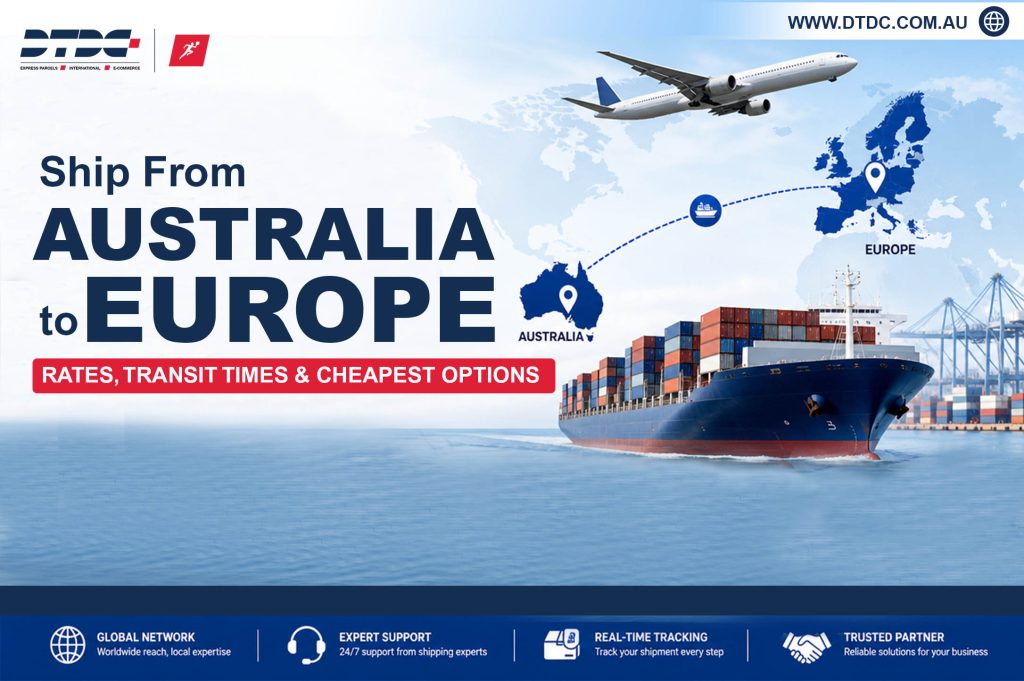
We have seen a gradual increase in orders being shipped from Australia to Europe in recent times. Whether the requirement is driven by the booming e-commerce, international trade demand, or manufacturing exports, businesses are expanding into one of the most significant markets.
With a landmark Free Trade Agreement, signed between Australia and Europe in March 2026, tariffs have been eliminated on more than 99% of goods, giving a major boost to both markets.
If you are already in business or about to start, these details will help you understand the pricing you may have to go through, the transit times, and which option would be affordable as per your shipment.
Air Freight vs Sea Freight vs Courier: Which Should You Use?
Before proceeding with your booking, when you are comparing australia to europe shipping cost, it is important to consider the major factors that determine the best freight option for your shipment. You need to consider speed- how fast you want the delivery as per package urgency, what is the size of your shipment, and what is your budget.
Each shipping mode serves different purposes, and you need to choose the right one as per your package to avoid excess charges or delays.
Express Courier Services
The express courier service can be an essential freight option for individuals and e-commerce sellers who need to send smaller parcels internationally.
Time: 2–7 business days
Best For: Small parcels (0.5kg–30kg), urgent deliveries
Major Carriers: DTDC Australia, DHL, FedEx, UPS
Suitable Industries: eCommerce, fashion, electronics, documents, healthcare samples
Express services offer door-to-door delivery, which means you do not have to worry about pickup as the agents will collect your parcel from your place and it will get delivered to the recipient’s door.
These services can be an affordable option within a weight limit, and although not always, express services are still considered the cheapest way to ship to europe from australia, especially for lightweight shipments. This eliminates additional charges and hidden costs, such as port handling or customs brokerage fees.
Pros:
- Faster deliveries with express courier
- Complete tracking from sender to receiver
- Reliable delivery timelines
- Easier documentation
- Get a Quote with DTDC Australia in seconds
Cons:
- For heavier shipments, there might be a higher cost per kg
- Remote area deliveries may have additional surcharges
Air Freight
Your medium-sized shipments that might be huge for courier services, but still need to be delivered ASAP, are best sent via air freight.
Time: 5–12 days
Best For: Shipments between 50kg and 500kg
Carriers: Qantas Freight, Emirates SkyCargo, Singapore Airlines Cargo
Suitable Industries: Automotive, pharmaceuticals, electronics, retail distribution
If you choose air freight australia to europe for your shipment, then your goods would be transported via commercial aircraft or cargo. This is also a faster delivery option; however, a lot of coordination with airport handling and customs processing is required.
Pros:
- Comparatively faster than sea freight
- A suitable option for bulk shipments that need to be delivered fast
- Offers reliable scheduling
Cons:
- An expensive option compared to sea freight
- Customs expertise needed
Sea Freight (FCL and LCL)
The most economical option for shipping that you may get is sea freight. Perfect for large, heavier shipments that do not have a specific time limit for delivery.
Time: 30–55 days
Best For: Shipments above 200kg or large-volume cargo
Suitable Industries: Furniture, machinery, industrial goods, wholesale inventory
In sea freight shipment, you get two main types to choose from-
- FCL – FCL, or the Full Container Load, allows shippers to book an entire container. All your load will be kept in one container, which will be sealed till it reaches the final destination.
- LCL – LCL, or the Less Than Container Load, lets you share the container space with the loads of other shippers. Here, one container has shipments from many shippers and is not sealed till the final location, may be opened for removing other loads.
Pros:
- Offer the lowest cost per unit
- Ideal option for bulk shipment
- Provides flexible container options
Cons:
- Longer transit times
- Delays during port handling
- Comparatively, more documentation is required
How Long Does Shipping from Australia to Europe Take?
Shipping timelines depend on the method you choose and the destination country. Below is a comparison table to help you understand how long does shipping take from australia to europe across major European markets.
| Country | Express Courier | Air Freight | Sea Freight |
| UK | 2–5 days | 5–8 days | 30–40 days |
| Germany | 3–6 days | 6–10 days | 35–45 days |
| France | 3–6 days | 6–10 days | 35–45 days |
| Italy | 4–7 days | 7–12 days | 40–50 days |
| Netherland | 3–6 days | 6–9 days | 30–40 days |
| Spain | 4–7 days | 7–12 days | 40–50 days |
| Poland | 4–8 days | 8–12 days | 40–55 days |
| Greece | 5–8 days | 8–12 days | 45–55 days |
What Can Delay Your Shipment?
Even with reliable carriers, delays can happen. Here are the most common reasons:
- Incorrect or incomplete shipping documents
- Customs inspections or clearance delays
- Public holidays in Europe
- Weather disruptions or airline delays
- Peak season congestion (especially November–December)
- Remote delivery locations within Europe
- Mislabeling or incorrect addresses
How Much Does It Cost to Ship from Australia to Europe?
Shipping costs vary based on weight, size, shipping method, and destination. Below is a general pricing guide for shipping to uk from australia and other European countries.
Express Courier Rates
- 0.5 kg: AUD $25–$45
- 1 kg: AUD $35–$60
- 5 kg: AUD $90–$150
- 10 kg: AUD $150–$250
Air Freight
- AUD $5–$12 per kg
Sea Freight LCL
- AUD $80–$150 per cubic meter
Sea Freight FCL
- 20ft container: AUD $2,000–$4,000
- 40ft container: AUD $3,500–$6,500
Key Extra Costs
- Fuel surcharges
- Customs clearance fees
- Insurance
- Warehousing fees
- Last-mile delivery charges
What Affects the Final Price?
Several factors influence the total shipping cost:
- Actual weight vs volumetric weight (whichever is higher)
- Fuel surcharges (updated monthly)
- Peak season surcharges (Nov–Dec)
- Remote area delivery fees
- Customs brokerage charges
- Import VAT (paid by the buyer in DDU shipping)
- IOSS requirement for EU parcels under €150 (starting July 2026)
Australian Customs & EU Import Rules: What You Need to Know
Shipping internationally requires compliance with both Australian export laws and EU import regulations.
- Export declaration required for shipments above AUD $2,000
- A commercial invoice must include accurate item details
- HS (Harmonised System) codes are mandatory
- EU VAT applies to most goods
- Duties depend on product category and value
- Proper labelling and packaging required
These rules are especially important for ecommerce shipping australia to europe businesses.
Prohibited and Restricted Items
- Explosives and flammable goods
- Perishable food items
- Counterfeit products
- Weapons and firearms
- Hazardous chemicals
- Lithium batteries (restricted in some cases)
Best Carriers for Shipping from Australia to Europe
| Carrier | Best For | Transit Time | Cost Range | Tracking Quality |
| DHL | Fast delivery | 2–5 days | High | Excellent |
| FedEx | Reliable shipping | 3–6 days | Medium–High | Excellent |
| UPS | Business logistics | 3–6 days | Medium–High | Excellent |
| DTDC | Budget shipping | 4–8 days | Low–Medium | Good |
| EMS | Postal shipments | 5–10 days | Low | Moderate |
Shipping to Europe as an Australian eCommerce Seller
For online sellers, logistics is a key part of customer experience.
- EU VAT:
- DDU: Customer pays VAT
- DDP: Seller pays VAT upfront
- IOSS Registration:
Required for shipments under €150 - Automation:
Platforms like Shopify and WooCommerce integrate with shipping tools - Returns:
Use EU-based warehouses to reduce return costs - Incoterms:
Choose between DDP and DDU carefully - Bulk Discounts:
Available for frequent shippers
7 Ways to Reduce Your Australia–Europe Shipping Costs
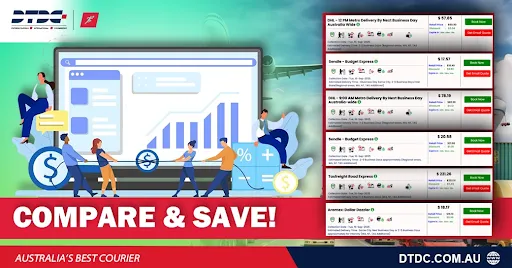
- Compare multiple carriers in one quote
- Use compact packaging
- Ship during off-peak seasons
- Use drop-off instead of pickup
- Choose LCL sea freight for larger shipments
- Open a business shipping account
- Pre-clear customs documentation
Shipping to Specific European Countries
Shipping demand is highest for:
- Australia to the UK
- Australia to Germany
- Australia to France
- Australia to the Netherlands
- Australia to Spain
Each route has slight variations in customs and transit times, but overall logistics processes remain similar.
Frequently Asked Questions
- How long does it take to ship from Australia to Europe?
If you choose a courier, then your shipment will be delivered in about 2-7 days. Air freight will take 5-12 days, and sea freight 30-55 days, should be considered the timeline.
- What is the cheapest way to ship from Australia to Europe?
For bulk shipments, sea freight is the most affordable way to ship to Europe. However, if you have smaller shipments that need to be delivered soon, then a courier would be the right option.
- Do I need to pay customs duty?
Yes, you may have to pay customs duty depending on the value of the shipment and the product type.
- What documents are required?
For shipping from Australia to Europe, you will require a commercial invoice, packing list, and a shipping label.
- Can I track my shipment?
Of course, you can track your shipment through. Tracking with DTDC Australia is easy. Just visit our tracking page, add your tracking number provided during booking and check the current location of your package.
Conclusion
This detailed guide will help you understand how transit times and rates vary with the shipping mode you choose to deliver your packages to Europe. If you have a lot to ship, then sea freight will cost you just right. A courier can be a good option for smaller items. Contact courier experts, of course, us, for more shipping details.