



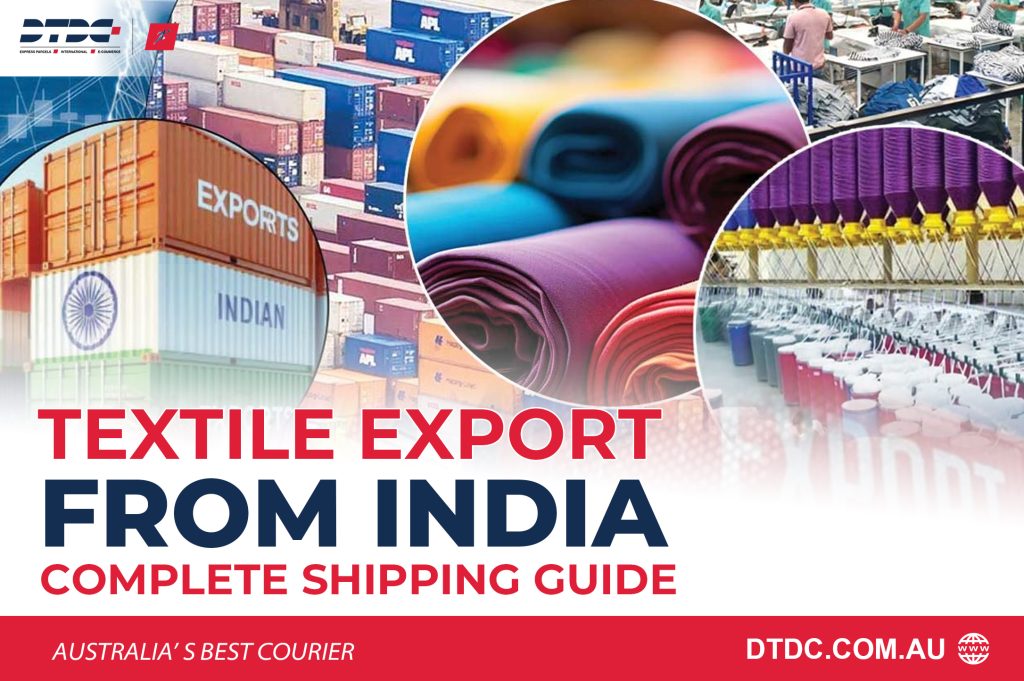
Indian textiles are world-renowned and loved for their quality fabric, and handcrafted designs reflecting the rich cultural heritage of the land, the diverse and vibrant colours, and the tradition that is admired by all. This is also the reason why the country leads in textile export.
This detailed guide would be a great help for those planning textile export from India to Australia, mentioning the necessary documents required, customs handling, freight costs and how they are considered, with, of course, how DTDC Australia helps here.
Key Takeaways
- With a strong global demand, India textile exports are witnessing a steady growth.
- Australia is one of the consistent and essential markets for Indian fabric.
- Textile shipping is special and thus requires accurate packaging and documentation.
- You can easily reduce delays and penalties if customs regulations are well understood.
- For a smooth delivery, it is significant to partner with an experienced logistics provider, and DTDC Australia is also the best in Customs Clearance.
India to Australia: Why Textile Export Is Growing Rapidly
The textile export from India to Australia is increasing because:
- Australia imports a significant share of its apparel and fabric needs.
- Indian textiles are competitively priced.
- Sustainable and handmade Indian fabrics are in high demand.
- Growing Indian diaspora in Australia boosts ethnic wear sales.
Indian exporters benefit from strong production capacity and diversified textile exports of India, including cotton yarn, silk, wool, carpets, garments, and technical textiles.
What Makes Textile Shipping Unique? (Challenges + Opportunities)
Textiles are different from other export categories because:
Challenges
- They are sensitive to moisture and humidity, and thus, special care is required
- Risk of fabric damage during transit is possible, and so, it must be carried accordingly.
- Strict labelling requirements so the items are handled as needed.
- Customs classification under the correct HS code
Opportunities
- High repeat demand
- Strong B2B wholesale market
- Seasonal fashion cycles create consistent orders
Understanding the nature of textile exports of India helps exporters prepare properly and avoid unnecessary losses.
Understanding Australia’s Demand for Indian Textiles
A complete textile export guide must consider the Australian market:
- Strong demand for cotton garments
- Growing preference for sustainable fabrics
- Popularity of Indian ethnic wear
- Rising home décor textile imports (bedsheets, curtains, cushion covers)
Australian buyers prefer:
- Quality assurance
- On-time delivery
- Transparent freight costs
- Compliance with import regulations
Preparing Your Fabrics for International Shipping
Proper preparation is key in the India to Australia shipping process:
- Use moisture-resistant packaging.
- Vacuum pack garments where possible.
- Label each carton with:
- Product description
- Fabric composition
- Country of origin (Made in India)
- Use strong corrugated export cartons.
- Add palletisation for bulk shipments.
Good packaging reduces textile freight costs caused by damage and returns.
How to Ship Textiles from India to Australia (A Practical Walkthrough)
Step 1: Finalise Product & Invoice
Include fabric type, quantity, weight, and value.
Step 2: Calculate textile freight costs
Costs depend on:
- Weight/volume
- Mode of transport (Air vs Sea)
- Insurance
- Customs duties
Air freight = faster but higher cost
Sea freight = economical for bulk textile shipments
Step 3: Choose the right carrier
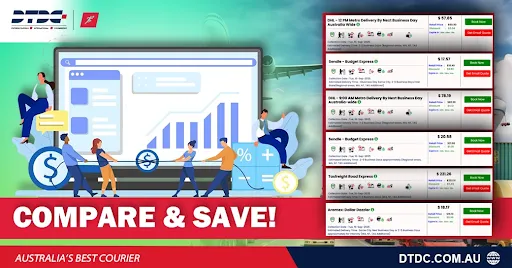
It is important to choose the right courier for your shipment that provides the desired conditions for textile transit. DTDC Australia can be a great help in this case, as it provides a range of courier services to choose from on one platform. You can choose the price limit that suits you and book your shipment easily from the free-to-use quote tool.
Getting Your Documents Ready
To comply with customs rules for textile export, you need:
- Commercial Invoice
- Packing List
- Shipping Bill
- IEC (Importer Exporter Code)
- Certificate of Origin
- GST documentation
Proper documentation prevents delays at Indian customs for textile shipments.
Booking and Dispatching with DTDC Australia
Working with DTDC Australia ensures:
- Timely and affordable pickup from the supplier
- Documentation assistance with the help of an experienced team handling customs for a long time
- Coordination with Indian customs for textile shipments
- Tracking support, where you can easily keep an eye on your shipment whenever you want.
Their expertise minimises errors in paperwork and classification.
What to Expect During Transit
After dispatch:
- The shipment reaches the Australian port.
- Clearance under Australia import customs for textiles.
- Duties and GST assessed (if applicable).
- Final delivery to the consignee.
Accurate HS classification helps avoid clearance delays.
Indian & Australian Customs Explained: A Simple Guide for Textile Exporters
Every exporter must understand the HS code for textiles export. Textiles generally fall under Chapters 50–63 of the Harmonized System.
An incorrect HS code can lead to:
- Fines
- Shipment holds
- Extra inspection
In Australia, customs assess:
- Import duty (if applicable)
- GST
- Biosecurity compliance
A correct declaration ensures smooth clearance.
Cost Breakdown: How Much Does It Actually Cost to Ship Textiles?
Typical cost components:
- Freight charges (air/sea)
- Customs clearance fees
- Export documentation fees
- Insurance
- Australian import duty & GST
- Local delivery charges
Small parcel textile shipments may start from moderate courier pricing, while bulk container shipping significantly reduces per-unit cost.
Common Mistakes to Avoid When Exporting Textiles to India
Even experienced exporters make errors:
- Incorrect HS code declaration
- Under-invoicing goods
- Poor packaging
- Ignoring Australian labelling laws
- Not calculating the total landed cost
Avoiding these mistakes protects profit margins and reputation.
How DTDC Australia Simplifies Textile Shipping (Real Benefits)
Partnering with DTDC Australia offers:
- End-to-end shipping solutions
- Air & sea freight options
- Transparent pricing
- Customs documentation support
- Reliable delivery timelines
- Tracking & customer support
For small and medium textile exporters, this reduces operational stress and ensures compliance.
Real-World Example: A Small Business Exporting Textiles Successfully
A Jaipur-based cotton garment manufacturer started exporting ethnic wear to Melbourne boutiques.
Challenges:
- Unfamiliar with Australian customs
- High initial textile freight costs
- Documentation confusion
With professional logistics support:
- Documents were prepared correctly
- HS codes were assigned properly
- Transit times were optimised
- Costs reduced via consolidated shipping
Within 6 months, repeat orders doubled.
FAQ
Are DTDC charges higher for international?
If you are comparing domestic shipment with international, then the shipping charges would be slightly higher because cross-border deliveries have to go through customs handling, a longer distance to be covered, and regulations of the nations. With the DTDC quote tool, you can compare prices from various carriers and choose the pricing you like.
What are the legal documents required for export from India?
Commercial invoice, packing list, shipping bill, IEC, GST records, and certificate of origin are typically required under customs rules for textile export.
What are the common export mistakes?
Some of the common export mistakes that you can make are providing the wrong HS code, incorrect invoice value, non-compliance with labelling, and ignoring import regulations.
What are the major problems of Indian export?
Documentation delays, logistics inefficiencies, compliance errors, and fluctuating freight costs are some major problems of Indian exports. However, if handled well and in a timely manner, these problems can be taken care of.
Final Thoughts
If you are already interested in being a part of this business and planning to initiate export for Indian textiles, then the market is great and can definitely be a profitable choice. The requirement is an efficient carrier that knows the market in and out, and can handle not just freight but also customs and regulations. This guide will benefit you in this case.