







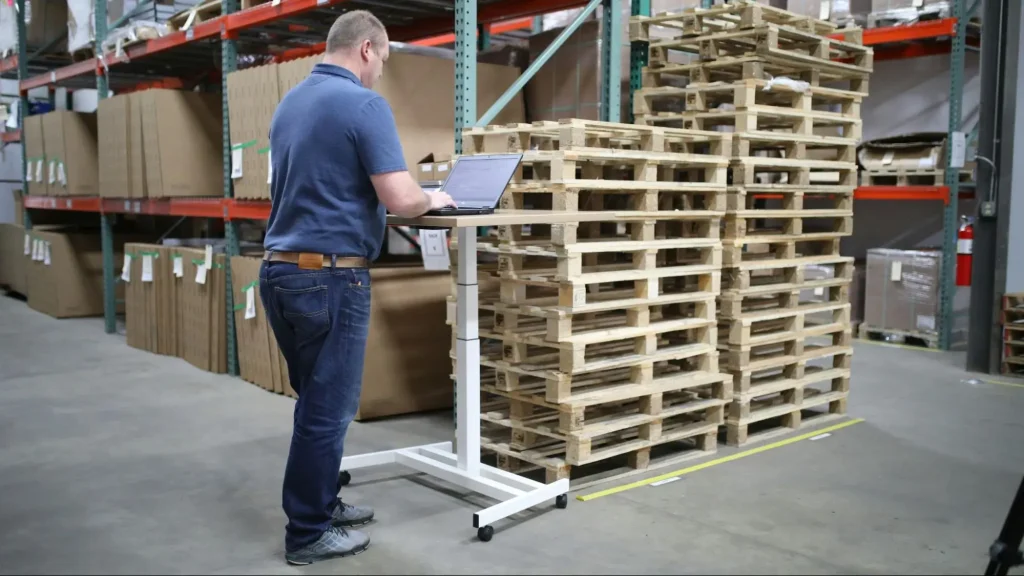
Reliable mobile access shapes the speed, accuracy, and predictability of global courier work. Drivers, warehouse teams, and cross-border coordinators rely on uninterrupted data to update parcel scans, manage routing systems, track inventory, and communicate with hubs across different time zones.
A single moment of lost connectivity can delay deliveries, confuse tracking records, or force manual workarounds that drain time and fuel.
Courier operations span ports, regional highways, dense industrial zones, and international borders, where network strength can vary. Maintaining a stable connection throughout these environments is one of the biggest logistical challenges companies face today.
Strong mobile coverage provides more than communication. It supports efficiency, reduces risk, and strengthens service reliability across the entire supply chain.
Why Reliable Connectivity Matters Across Delivery Routes and Distribution Hubs
Courier networks function as a continuous chain of digital checkpoints. Every scan, dispatch instruction, route update, and security measure depends on real-time data. When coverage drops, important processes stall.
A delivery driver might lose access to navigation, or the warehouse might experience delays in uploading inventory counts. In addition, a customer tracking their parcel might see outdated data that leads to unnecessary enquiries. Even small interruptions can disrupt a courier’s workflow.
Connectivity issues are common across global logistics. Potential issues include:
- Variable coverage along long-haul routes: Drivers move in and out of areas with inconsistent signal quality. Rural regions, tunnels, and industrial estates often sit outside strong tower coverage. Courier routes change daily, which means connectivity challenges also vary accordingly.
- High-density areas with overloaded towers: Ports, airports, and major logistics hubs are home to thousands of devices. Heavy traffic can overload a tower, reducing speeds for essential courier equipment, such as scanning tools and routing systems.
- Changing networks across borders: International deliveries require seamless transitions between carriers. Physical SIM swaps slow drivers down and increase the risk of misconfiguration. When a device cannot register on a new network quickly, updates freeze until coverage returns.
- Warehouses with structural interference: Thick steel construction, container stacks, and machinery can weaken signals inside distribution facilities. Scanners and handheld units struggle to upload data in real time, which affects sorting accuracy and dispatch timing.
A connected courier network avoids these problems by ensuring every device communicates clearly and consistently. Reliable mobile data supports staff safety, improves the customer experience, and prevents operational errors that become costly over time.
Smarter Mobile Access for Drivers and Distribution Networks
Courier operations rely on devices that remain connected across various regions, carrier footprints, and diverse infrastructure environments.
An eSIM provides the flexibility required for these conditions by embedding the mobile profile directly into the device hardware. Instead of relying on a removable SIM, the courier’s device stores multiple carrier profiles digitally and can switch between them through software rather than manual handling.
Signal strength changes constantly across delivery routes. An eSIM-equipped device can evaluate available networks and shift to the carrier offering the strongest tower signal or lowest congestion.
The switch happens at the software level, so drivers do not lose access to navigation, dispatch updates, or parcel scanning tools when coverage drops. Drivers benefit most from this along regional delivery paths and in areas where carrier coverage varies sharply from one tower zone to the next.
Remote Provisioning for Large Courier Fleets
Managing connectivity for hundreds or thousands of devices is a major operational burden. eSIM technology allows mobile profiles to be activated, replaced, or updated remotely through a management platform.
Fleet managers can provide new devices, deactivate lost units, or switch regional plans without collecting equipment or swapping physical SIM cards. The reduction in manual handling lowers downtime and allows IT teams to implement connectivity changes across an entire fleet within minutes.
Improved Reliability Inside Signal-Challenged Facilities
Due to the restriction of mobile signals in warehouses, the need for improved connectivity becomes essential.
eSIM support for multi-carrier access enables devices to find a usable signal by drawing from multiple providers. In practice, this means scanners upload data more consistently, telematics units stay online within loading bays, and handheld devices maintain access to routing or inventory platforms even when Wi-Fi coverage is limited.
Stronger Device Durability and Reduced Hardware Failures
Courier devices are at risk from drops, vibration, temperature fluctuations, and moisture exposure. Physical SIM trays can loosen, corrode, or crack under these conditions.
An eSIM eliminates the mechanical components at risk. With the connectivity element integrated into the chipset, rugged scanners, driver tablets, and vehicle-mounted units become more reliable and maintain connectivity longer under demanding conditions.
Security Advantages Across Mobile Courier Tools
Security matters in courier work, especially when devices store customer addresses, delivery notes, signatures, and driver location data.
eSIM technology eliminates the risk of SIM-swap fraud because the profile cannot be removed and placed into another device. Network authentication happens securely through encrypted channels and is tied to the device’s hardware ID.
For operations that manage cross-border deliveries or high-value shipments, these protections provide a significant advantage over traditional SIMs.
Copyright: Unsplash | License: CC0 Domain
Connectivity’s Influence on Warehouse Efficiency
Distribution hubs act as the operational core of courier networks. They coordinate inbound freight, manage automated sorting systems, allocate loading bays, and confirm outgoing manifests. Each of these tasks relies on accurate and uninterrupted data flow between handheld devices, warehouse software, and vehicle systems. Reliable mobile connectivity is essential for maintaining speed, accuracy, and safety inside these facilities.
Improving Inventory Speed, Accuracy, and Traceability
Handheld scanners and mobile terminals communicate with inventory management platforms in real-time. Reliable connectivity ensures that:
- Barcode scans synchronise instantly, preventing duplicate scans or delayed sorting.
- Cross-docking decisions remain accurate, as inbound and outbound updates are transmitted to the system without interruption.
- Cycle counts and pallet verifications occur efficiently, which is critical in high-throughput facilities.
Offline scanning forces workers to repeat entries or correct mismatches later, increasing labour hours and the likelihood of errors. Strong connectivity prevents these issues and supports rapid parcel movement through the facility.
Supporting Automated and Semi-Automated Systems
Modern warehouses rely heavily on automation, including conveyor sensors, robotic picking arms, and automated guided vehicles. These systems require continuous communication with central platforms. Connectivity disruptions can:
- Halt conveyor operations that rely on scan feedback
- Interrupt navigation tools used by robotics
- Cause misrouted parcels due to missing data
- Trigger emergency stops that slow down entire zones
Reliable mobile access provides an additional communication layer for areas where Wi-Fi is unstable because of steel racks, vibration from machinery, or large volumes of connected devices.
Strengthening Safety and Internal Communication
Safety teams monitor forklift activity, equipment status, and hazard alerts. Stable connectivity supports fast reporting and clear communication when:
- Workers identify a spill or a blocked aisle
- A machine displays a malfunction warning
- Medical incidents require immediate supervisor contact
- Evacuation instructions must reach staff quickly
Connected teams respond faster, log incidents accurately, and maintain compliance with internal and external safety standards.
Improving Driver Check-In, Yard Flow, and Load Allocation
Arrival and departure procedures depend on coordinated updates. Reliable mobile coverage ensures that:
- Drivers receive digital check-in prompts immediately
- Gate teams send bay assignments without delays
- Loaders get real-time notifications when trailers reach the docks
- Weight, manifest, and seal checks synchronise across systems
Efficient yard management reduces congestion and supports predictable dispatch times across daily schedules.
Warehouses that maintain stable connectivity reduce downtime, increase throughput, and improve both safety and accuracy across all operational layers.
The Future of Courier Reliability Starts With Consistent Mobile Access
Global courier operations depend on continuous communication that supports every step of the journey, from international routing to local warehouse scanning. Reliable mobile connectivity strengthens the entire supply chain by improving accuracy, efficiency, and security.
As delivery networks expand, couriers need mobile solutions that adapt quickly to shifting conditions and demanding environments. Stronger connections lead to more predictable operations, fewer delays, and a delivery experience customers can depend on every time.